Create, check and track a direct-mail campaign.
Courrier Pub Express combines an A5 card delivered by La Poste, a unique QR code and a dedicated web page. I designed the journey for preparing a campaign, checking its assets before sending and tracking its progress.
The starting point
The assignment started at the design stage, from a draft created by the developer and product owner. With stakeholders, I scoped the problems, then worked on the journey, mockups and prototype.
The journey had to bring a printed card and a web page together in one flow, for advertisers with different levels of digital maturity. It is structured in three steps: configuration, validation and payment. After creation, the home screen provides campaign tracking.
One creation journey, then campaign tracking
01
Configuration
Prepare the campaign and its assets.
02
Validation
Check the assets before sending.
03
Payment
Finalise the campaign.
What the prototype made possible to observe
Eight one-hour remote Teams interviews with potential customers in June 2025 examined the journey. For around thirty minutes, participants created a campaign on a clickable prototype while thinking aloud.
Campaign tracking was then presented for around fifteen minutes in a narrated slideshow. The research summary states that all eight participants succeeded in creating a campaign on the prototype and identifies the clarifications to make.
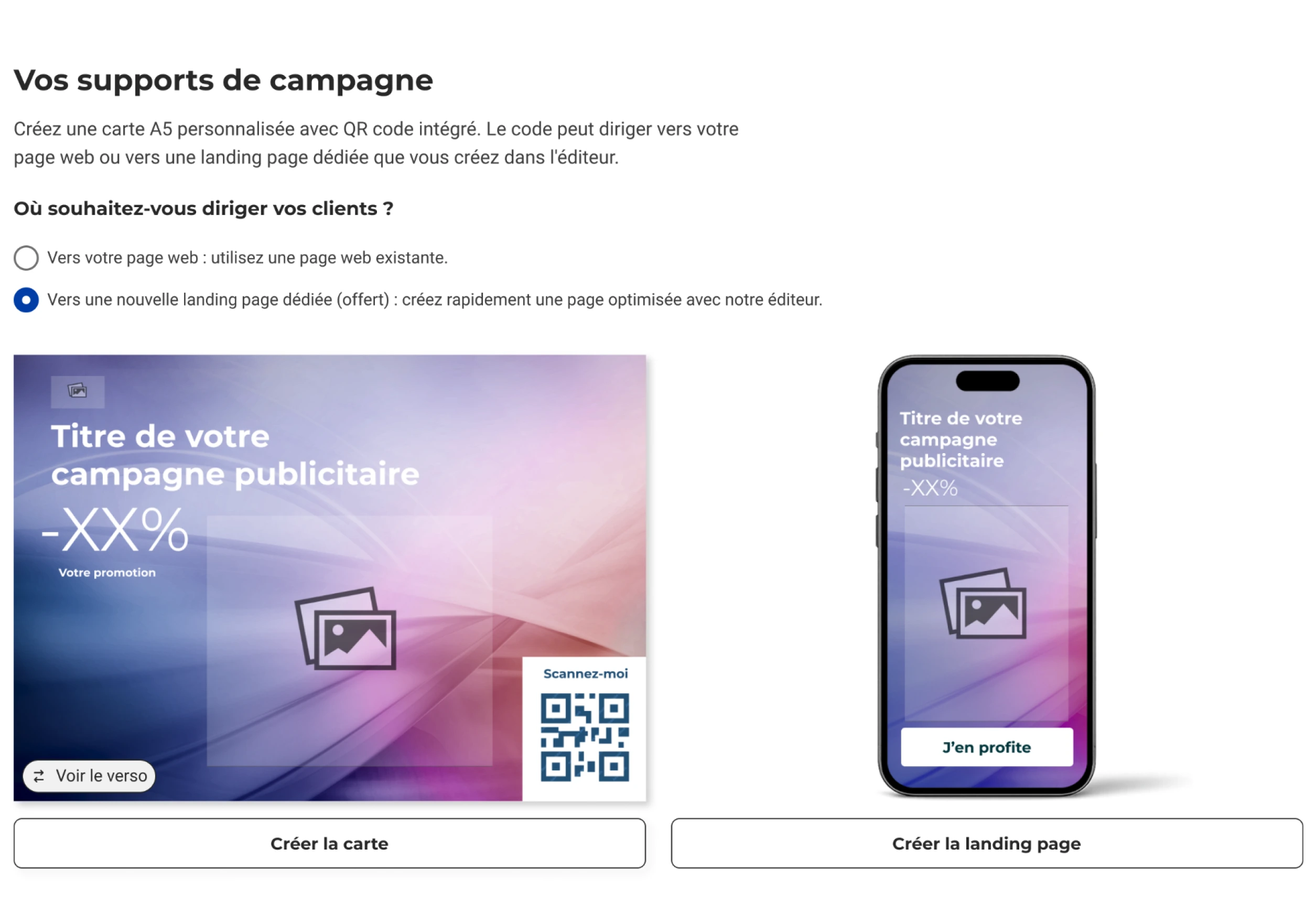
Explain where the QR code will lead
Three participants needed a clearer understanding of the choice between using their own web page or creating one. Two radio buttons and a description make this difference clear.
An existing page avoids creating one in the tool. The other option creates a page dedicated to the campaign.
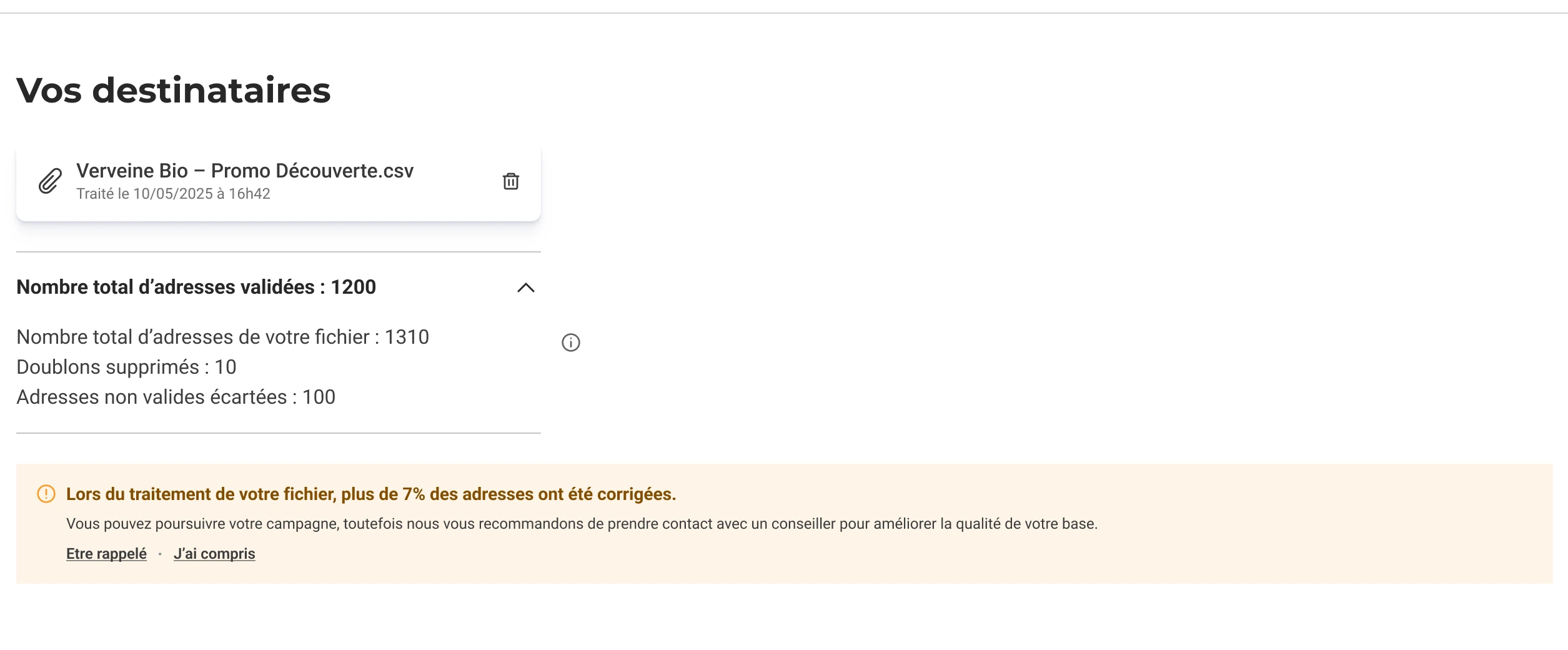
Explain what happens to addresses
Before starting file processing, three participants asked what would happen to their addresses. Explanatory text was therefore placed before the “Start processing” action.
When more than 7% of addresses are corrected, a warning explains the situation. The user can ask to be called back by an adviser or confirm they understand to continue.

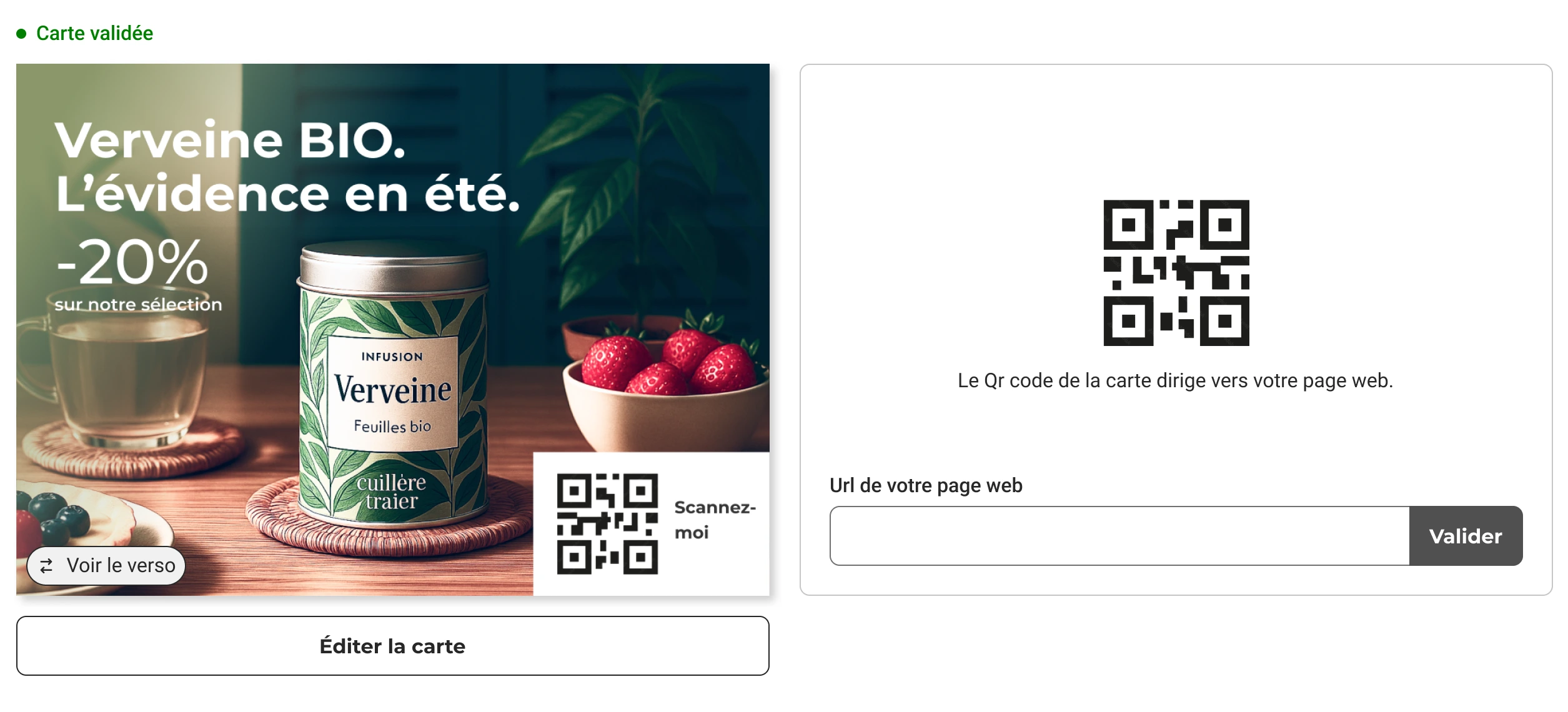
Make validation visible
After approving their card in the editor, participants expected to clearly move on to the next step. The response closes the editor and returns to configuration, where the card is marked as approved.
The green status appears next to the card preview. The “Edit” button remains available to modify its content.
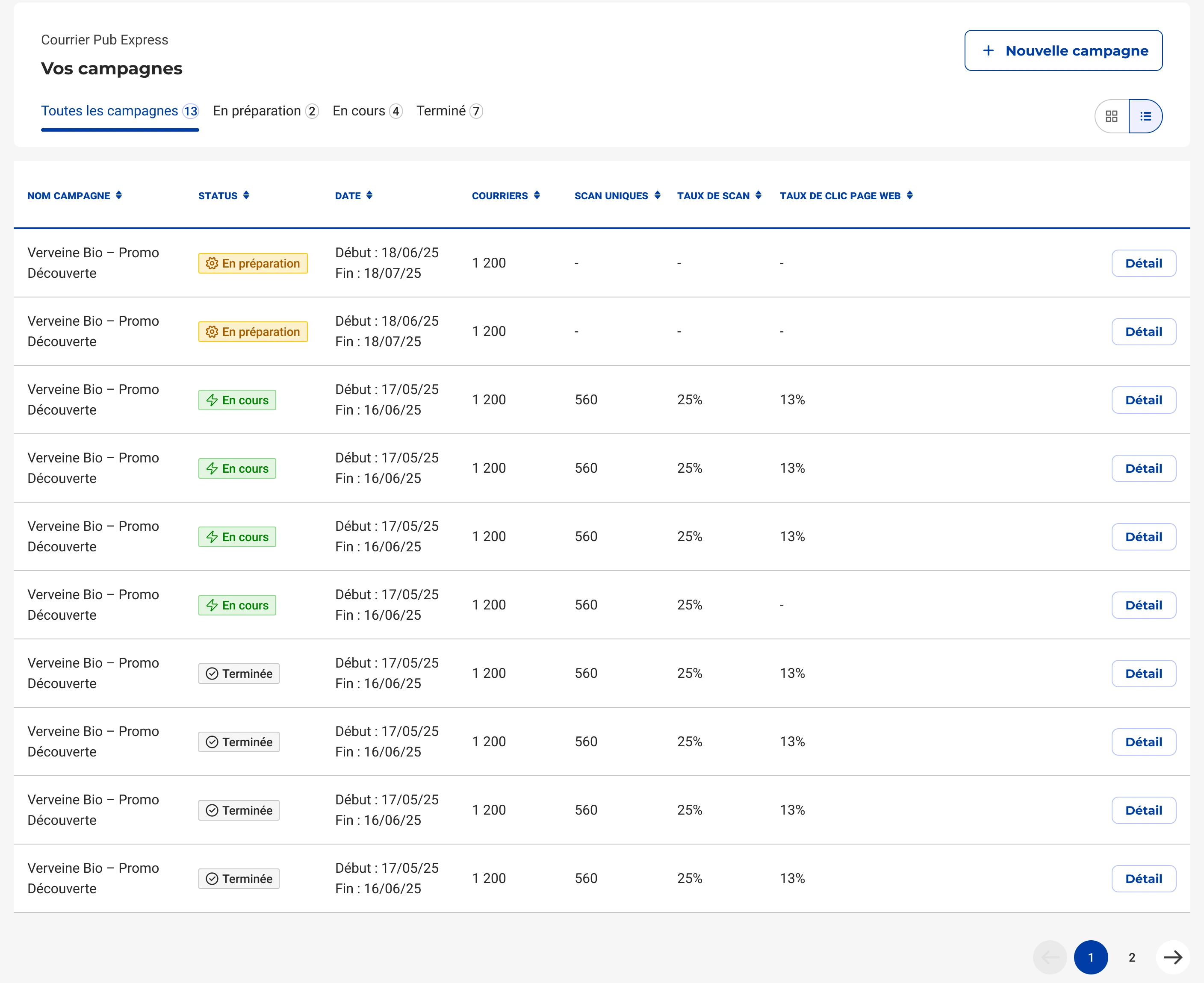
After creation, find the campaign again
Once a campaign has been created, the home screen becomes a dashboard: it gives access to campaigns in progress and their history.
Campaign tracking was presented for around fifteen minutes in a narrated slideshow. It was not tested independently on the prototype.
Delivery and limitations
My design deliverables cover the journey, mockups and prototype. They made the choices to carry into the next phase of the project explicit.
The research summary identified points to clarify before delivery: the choice of asset, address processing and card validation.
What this research can — and cannot — tell us
Campaign creation is a reported prototype result, not a measure of production adoption or conversion. The protocol asked participants to create the campaign independently; the research summary does not support claiming that no help was observed and does not document a retest after corrections. A CSV export of incorrect or corrected addresses is excluded for an unknown reason. Bank-transfer payment is recorded as a need, with no documented response.